Track and Roller Wear on Panasonic Automatic Doors
How to judge track and roller wear, the replacement criteria, and the key installation points that keep the door panel running smoothly and quietly.
How to judge track and roller wear, the replacement criteria, and the key installation points that keep the door panel running smoothly and quietly.
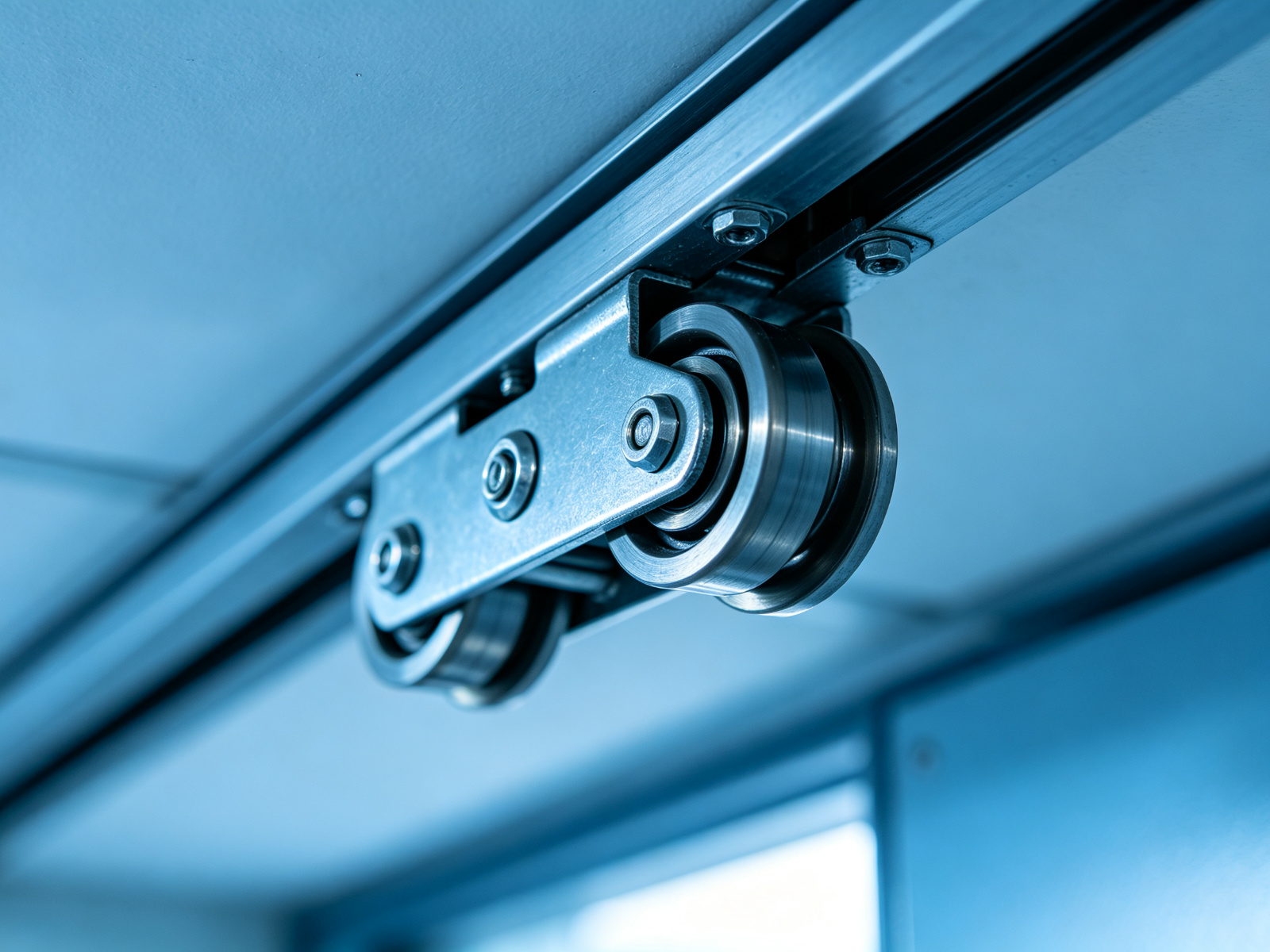
Roller wear is not only about the steady, constant-speed rolling of the roller along the track; more importantly, it refers to the wear that occurs during the short, repeated acceleration cycles of an automatic sliding door. In general, at low and constant speed the roller wears very little, because the coefficient of rolling friction is far smaller than that of sliding friction. However, an automatic sliding door reaches a speed of 0.4–0.7 m/s from a standstill in a very short time and then decelerates until the door stops at its end position. Because the door is driven by a motor fixed to the operator that drives the timing belt through transmission gears, the motion is much like a car rapidly accelerating and braking; the front or rear rollers experience large downward pressure, which increases friction. If dust has built up on the track, roller wear becomes even greater. In addition, because the travel of an automatic sliding door is fixed, the worn area on the rollers is also relatively fixed. Rollers that have not been replaced for a long time become worn into a triangular arc shape. The door panel then bounces up and down as it runs, producing significant noise. If this continues, the aluminum track becomes wavy, opening and closing speed drops, the electrical components are overloaded, and the operator is eventually completely worn out. For an ordinary automatic sliding door, if installation and maintenance are poor, this failure can occur within a single year. The aluminum track has relatively low precision and strength, and high-frequency use greatly accelerates this wear-out process.
A systematic solution is essential to fully prevent this problem. First, the quality of the aluminum extrusion must be improved to ensure the strength, wear resistance and straightness of the track. Second, a roller material with good self-lubrication must be chosen, because no lubricant can be applied to the upper and lower sides of the track—lubrication accelerates dust buildup. The rollers on Panasonic automatic sliding doors are made of special nylon, which is strong, wear-resistant and self-lubricating, while also providing a degree of shock absorption. Yet the key question is how to achieve a fundamental solution from the standpoint of dynamic process through the structural design of the roller arrangement. On the market, a simple roller arrangement is a single-roller structure: one roller connects to one door-panel hanger, and a door is suspended and driven by two rollers. This primitive—and inexpensive—design simply cannot solve the wear problem between roller and track. Connecting two rollers to a single door-panel hanger, so that a door is suspended and driven by four rollers, distributes the friction and improves door stability; it can be said to double the service life of the automatic door.
Track and Roller Wear on Panasonic Automatic Doors
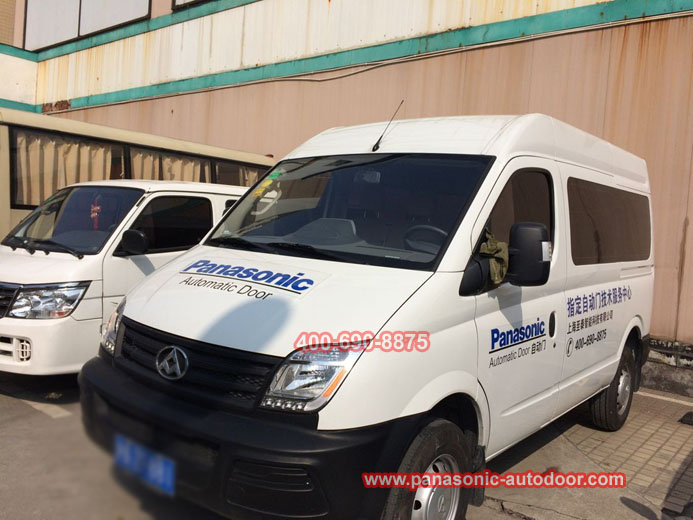
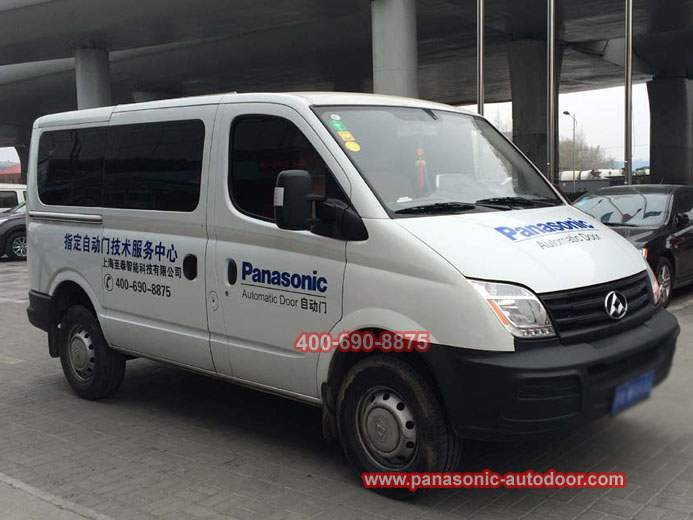
ZITIN operates dedicated service vehicles fully equipped with a complete set of Panasonic automatic door repair tools and genuine original parts. Our engineers are certified and respond within 30 minutes, providing 24-hour on-site service across all districts.
Complete repair tools · original parts carried on board
Certified engineers · professional technical service
Professional Panasonic automatic door repair & maintenance, authorized genuine parts
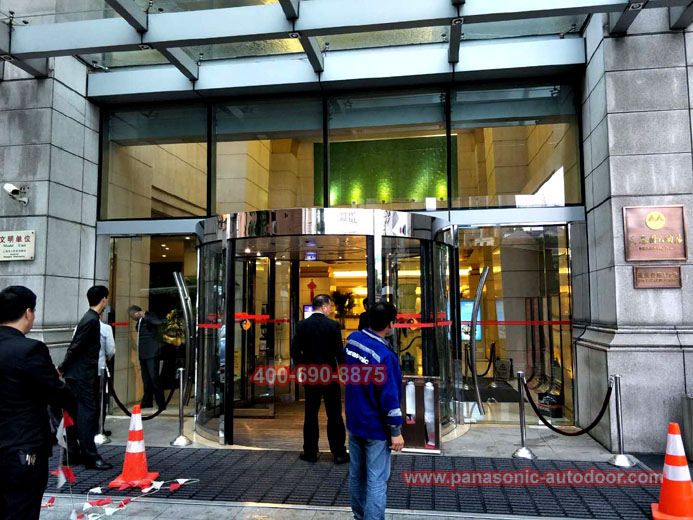
Professional repair of Panasonic automatic revolving doors, including three-wing, four-wing and crystal revolving doors. We provide motor replacement, controller repair, sensor adjustment, seal replacement, track alignment, fault diagnosis and maintenance. Genuine original parts with certified on-site engineers and fast response.
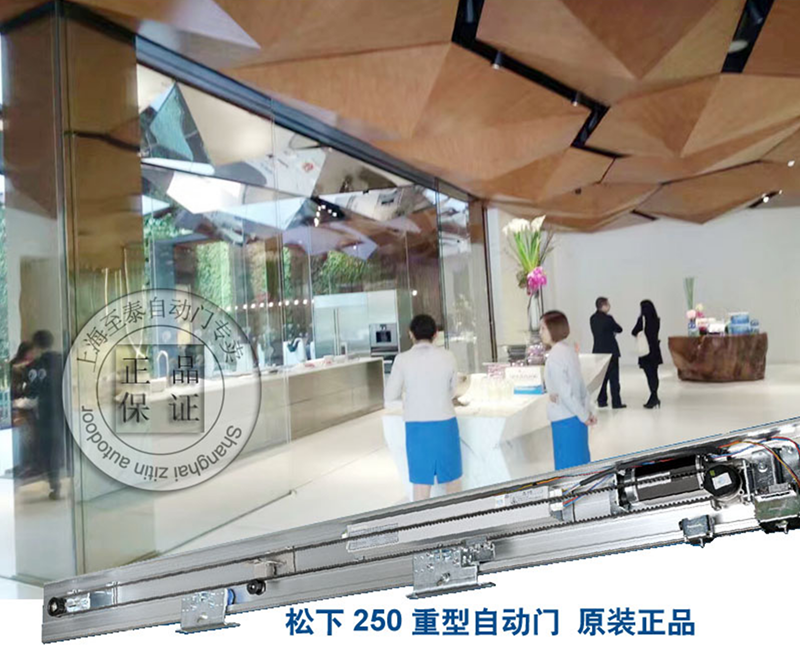
Professional repair of Panasonic sliding automatic doors, sensor doors, curved doors, telescopic doors and medical automatic doors. Services include motor repair and replacement, controller tuning, microwave sensor calibration, safety beam installation, roller replacement, access control integration and annual maintenance. Authorized parts, 24-hour on-site service.